
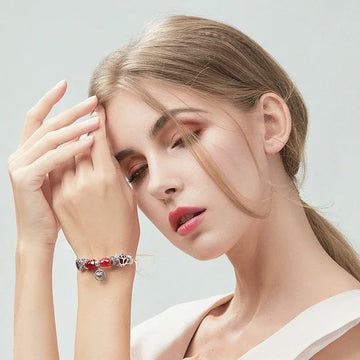
If you have been browsing bracelets lately, you have probably noticed how different the options can be: a fine chain with one small charm, a wrist full of beads, or a broad cuff worn on its own. They do not all belong to one trend, and there is no single bracelet that works for everyone.
A more useful way to approach popular bracelet styles is to look at what you would actually wear. Some make it easy to add a personal detail. Others bring color, shape or a little sparkle to familiar clothes. Here are seven styles worth considering and the differences that may help you choose.
1. Charm Bracelets: Start Small and Make Them Personal
A charm bracelet gives you room to choose something beyond a color or finish. An initial, a favorite animal or a reminder of a place can make even a simple bracelet feel connected to your life.
You do not need to fill it immediately. A chain with one or two charms can be easier to wear and gives each detail room to show. Later additions might mark a birthday, a trip or a new interest.
Before choosing charms, check the attachment system. Hanging charms, slide-on beads and threaded designs are not always interchangeable. The bracelet’s thickness, charm opening and extra weight all affect how the finished piece fits.

2. Layered Bracelets: Work With What You Already Own
Layering offers a way to change your jewelry without replacing everything. A slim chain beside a bangle creates a different effect from two similar chains, while a beaded bracelet can introduce color to a mostly metal combination.
Start with two pieces and wear them together for a while. Notice whether they slide comfortably, catch against each other or feel distracting during the day. A stack that looks balanced in a photograph can behave quite differently when you are typing or reaching into a bag.
You can mix metal colors, but pay attention to the surfaces. Hard edges and raised settings may rub against softer materials or delicate finishes. Leave your most fragile pieces out of a crowded stack.
3. Minimalist Cuffs: A Clear Shape Without Extra Detail
A narrow cuff can add definition to the wrist without a row of charms or stones. Its shape is the main feature, whether the surface is polished, brushed or gently textured.
This makes a simple cuff easy to pair with clothes that already have detail. It can sit beside a plain ring or small earrings without making the whole combination feel busy.
Check the fit carefully. A cuff should feel secure without pressing into the skin, and an open design is not automatically adjustable. Some cuffs can tolerate a small adjustment; others should keep their original shape. Follow the maker’s guidance rather than bending it each time you put it on.
4. Statement Bangles: Let the Bracelet Do the Work
A broad bangle can give a plain outfit a clear focal point. You might choose a smooth metal surface, an unusual shape or a textured finish—the design does not need stones to be noticeable.
Before buying, consider weight and opening method. A slip-on bangle must pass over your hand, while a hinged design opens around the wrist. Also think about sleeves: a wide bracelet may work well with a short-sleeved top but feel awkward beneath a fitted cuff.
5. Beaded Bracelets: Bring in Color and Texture
Beaded bracelets are useful when you want something different from an all-metal look. Pale colors can sit quietly beside silver, while stronger shades create more contrast. Wood, glass, pearls and different stones each bring their own texture.
Smaller beads are generally easier to combine with other jewelry. Larger ones make more of a statement, but they also take up more room around the wrist and can press against a desk or sleeve.
Look at the construction before choosing by color alone. Elastic, cord and wire need different handling, and care depends on the beads themselves. Avoid stretching an elastic bracelet forcefully or using a cleaning method without checking whether it suits every material in the piece.
6. Tennis Bracelets: A Little Light Along the Wrist
A tennis bracelet creates a continuous line of individually set stones. Worn alone, it can be quite restrained; the effect changes with the size of the stones and how prominently they are set.
Diamonds are one option, but similar designs also use other gemstones and diamond simulants. Read the material description carefully rather than assuming that every clear stone is a diamond.
For frequent wear, the setting and clasp matter as much as appearance. Check that the bracelet moves smoothly and closes securely. If you often wear fine knitwear, look for settings that are less likely to catch against the fabric.
7. Personalized Bracelets: Keep the Detail Meaningful
A name, an initial or a short engraved date can make a bracelet personal without adding much decoration. A slim bar bracelet offers space for a message, while a single letter on a chain keeps the design smaller.
Think about how the detail will look at its actual size. A long inscription may be difficult to read on a narrow surface, and decorative lettering can be less clear than a simpler font. Check the available space, spelling and preview before ordering.
For a gift, personalization works best when the bracelet also suits the person’s taste. An engraved piece is more likely to be worn if its metal color, fit and fastening feel familiar. Check the return policy too, since customized pieces may have different conditions.
Which Bracelet Style Should You Choose?
Look at the jewelry you already reach for. If you wear the same delicate necklace most days, a fine chain or small initial bracelet may fit naturally into your routine. If your clothes tend to be simple, a broader cuff or bangle can add shape without needing several accessories.
A charm bracelet offers room to build a collection, while beads give you more freedom with color. A tennis bracelet may appeal if you enjoy a line of sparkle without a large centerpiece. These are starting points rather than rules; comfort and personal preference should decide the final choice.
Before buying, check the measurements, materials and fastening. Then picture wearing the bracelet through an ordinary day. The style worth choosing is the one you will still want on your wrist after the first photograph.